

Most engineers inherit plating specifications from legacy designs or rely on what is commonly used in their industry for similar applications. But here's the challenge: Do those standards actually validate what your part needs to do in the field?
The electroplating industry relies heavily on 8-10 common specifications, many developed in the 1940s and 1950s for military and aerospace applications. While these standards have proven their value over decades, understanding what they actually test—and what they don't—can mean the difference between specifying requirements that validate real-world performance and simply checking compliance boxes.
In this article, we'll explore the most common electroplating testing standards, explain what each one measures, and help you determine when standard specifications align with your application requirements and when they need adjustment.
What are the testing standards for electroplating?
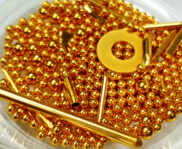
Approximately 85% of high-reliability electroplating work follows just two primary standards: AMS QQ-N-290 for nickel plating and ASTM B488 for gold plating. These specifications have become industry workhorses because they cover the fundamental quality requirements for corrosion protection, electrical conductivity, and mechanical durability across aerospace, medical, telecommunications, and automotive applications.
However, the prevalence of these standards doesn't automatically make them the right choice for every application. The key question isn't "what test should I run?" but rather "does this testing protocol validate how my part will actually perform?"
AMS QQ-N-290 and ASTM B488 Testing Standards, Explained
AMS QQ-N-290: Nickel Plating
This specification covers electrodeposited nickel coatings and defines requirements for adhesion, thickness, appearance, and corrosion resistance. It's the go-to standard for parts requiring corrosion protection, solderability, or wear resistance.
What are common applications for AMS QQ-N-290?
- Aerospace connectors and structural components
- RF/microwave components requiring non-magnetic alternatives
- Medical devices needing biocompatible, solderable finishes
- Automotive safety-critical components
What does AMS QQ-N-290 test?
- Adhesion through bend testing or thermal shock
- Thickness via X-ray fluorescence (XRF) or microscopy
- Visual appearance and surface defects
- Corrosion resistance through environmental exposure
When is AMS QQ-N-290 appropriate?
AMS QQ-N-290 is well-suited for parts that will experience mechanical stress, environmental exposure, or require a foundation layer for subsequent plating processes (such as gold or silver over nickel).
ASTM B488: Gold Plating
This standard specifies requirements for gold electroplating on metal substrates. Its flexibility allows engineers to specify different gold purities and hardness levels within the same standard, making it adaptable to various applications.
What are common applications for ASTM B488?
- Electronic contacts and connectors
- Aerospace components in extreme environments
- Medical instruments requiring biocompatibility
- High-reliability switch contacts
What does ASTM B488 test?
- Adhesion through tape testing or thermal cycling
- Thickness measurement at specified locations
- Gold purity verification
- Hardness testing for wear resistance (when hard gold is specified)
When is ASTM B488 appropriate?
ASTM B488 is a good fit for applications requiring electrical conductivity, corrosion resistance, biocompatibility, or where oxidation would compromise performance. The standard's built-in flexibility allows engineers to specify soft gold for solderability or hard gold for wear resistance in connector applications.
Additional Industry Standards
MIL-DTL-45204 (Military Gold Plating)
This military specification sets higher requirements for adhesion and environmental resistance than standard commercial gold plating specifications. It's designed for components that must survive extreme conditions, including thermal cycling, high humidity, and corrosive atmospheres.
QQ-S-365 / ASTM B700 (Silver Plating)
Silver offers the highest electrical conductivity of any metal, making these specifications critical for RF/microwave applications where minimizing signal loss is paramount. However, silver's tendency to tarnish requires careful consideration of the operating environment and may necessitate additional protective measures.
MIL-STD-202 (Environmental Testing)
Rather than specifying plating processes, this standard defines environmental test methods, including thermal shock, vibration, humidity resistance, and solderability. These tests validate how components will perform under real-world stress conditions, making them valuable additions to process-focused specifications.
What Testing Actually Measures (And What It Doesn't)
Thickness Measurement
Thickness measurement is the most frequently performed "test" in electroplating, though technically, it's measuring rather than testing. Methods include X-ray fluorescence (XRF), cross-sectioning, and microscopy, each with specific advantages depending on part geometry and deposit layers.
- What Thickness Measurement Tells You: Whether the plating deposit meets the specified thickness range at designated measurement points.
- What Thickness Measurement Doesn't Tell You: Whether that thickness is actually necessary for your application, whether coverage is uniform in critical areas, or whether the deposit will perform as required in service.
Consider this scenario: A specification calls for 10 micro-inches of gold plating. The parts measure correctly at the designated test points and pass inspection. However, if those parts have deep internal diameters that require plating coverage, achieving adequate adhesion and thickness in those recessed areas may require 50+ micro-inches on the exterior surfaces. The parts meet the thickness specification but may not meet the functional requirement.
Adhesion Testing: The Critical Quality Metric
Adhesion testing validates whether the plating will remain bonded to the substrate under mechanical stress, thermal cycling, or environmental exposure. Ultimately, what our customers want is a plating deposit that's going to stand up and not fail.
ASTM B571: The Adhesion Testing Standard
While most plating specifications define their own adhesion test methods, ASTM B571 serves as the foundational standard for adhesion testing of metallic coatings. This specification is referenced in virtually every finishing specification and provides multiple test methods that can be applied across different plating types and applications. ASTM B571 includes procedures for bend testing, heat-quench testing, and file testing, giving engineers flexibility to select the adhesion validation method most appropriate for their specific application and substrate-coating combination.
Common Adhesion Testing Methods:
- Bend Test: The plated part is bent to a specified radius. Plating should not flake, peel, or separate from the substrate.
- Tape Test: Adhesive tape is applied to the plated surface and removed. The plating should remain intact.
- Thermal Shock: Parts undergo rapid temperature changes. The plating must withstand the differential expansion without delaminating.
- Heat-Quench Test: Parts are heated to a specified temperature and then rapidly cooled, validating adhesion under extreme thermal stress.
Why It Matters: Parts can meet every thickness specification and still fail catastrophically if the plating doesn't adhere properly. Adhesion problems often trace back to contamination before plating, improper surface preparation, or incompatible substrate-coating combinations. This is why adhesion testing is one of the most important requirements in high-reliability plating, and why ASTM B571 appears as a reference in almost every plating specification across industries.
Specialized Testing for Specific Applications
Salt Spray Testing (Corrosion Resistance)
This accelerated corrosion test exposes parts to a salt fog environment for a specified duration. While useful for comparing relative corrosion resistance, salt spray results don't always correlate directly with real-world service life. Parts that pass salt spray may still corrode in actual use, and vice versa, depending on the specific environmental conditions they encounter.
Nitric Vapor Testing (Porosity Detection)
This test identifies porosity in noble metal deposits (gold, silver, palladium) over base metals. Nitric acid vapor penetrates through pores to attack the base metal, creating visible spots. It's particularly valuable for high-reliability applications where even microscopic porosity could lead to corrosion or electrical failure.
Solderability Testing
For parts that will be soldered in assembly, solderability testing validates that the plated surface will wet properly with solder. This becomes critical when excessive gold thickness can cause embrittlement during soldering, or when oxidation of underlying layers compromises solder joint formation.
Common Specification Mismatches
The gap between standard specifications and actual application requirements creates some of the most persistent challenges in electroplating. Here are real-world examples where following standard testing protocols doesn't necessarily validate part performance.
Mismatch #1: Testing for Conditions the Part Never Experiences
Industry specifications often include test methods developed for broad applications. A customer might specify crush testing because it's listed in the standard they selected, but if the part never experiences compression forces in service, that test validates nothing about actual performance.
- The Problem: Resources spent on irrelevant testing while actual failure modes go unexamined.
- Better Approach: Focus testing on the environmental conditions, mechanical stresses, and failure modes the part will actually encounter. If vibration will be the primary stress, thermal cycling tests may be more valuable than crush testing.
Mismatch #2: Thickness Requirements vs. Geometric Reality
This is one of the most common disconnects between specifications and manufacturing reality. Engineers often specify minimum plating thickness without considering part geometry.
- Real-World Example: A specification calls for 10 micro-inches of gold plating to provide minimal visible coverage and corrosion protection. However, the part has deep internal diameters that require plating coverage for electrical contact.
Achieving adequate adhesion and thickness in recessed areas requires significantly more metal deposition on exterior surfaces—potentially 50+ micro-inches. The customer may be budgeting for 10, but the plating process requires 50 to meet their actual functional needs. Either the specification fails to meet the application requirement, or the customer faces an unwelcome surprise that reaching the requirements requires more cost.
- Better Approach: When parts have complex geometry with deep holes, recesses, or internal features requiring plating coverage, work with your plating partner to understand the thickness distribution required. Specify thicker deposits in accessible areas or consider alternative processes like Spouted Bed Electrode (SBE) technology designed specifically for uniform coverage on complex geometries.
Mismatch #3: Material Selection That Works Against the Application
Sometimes standard specifications lead engineers to specify materials that actually compromise performance for their specific application.
- Gold Embrittlement Example: An engineer specifies 300 micro-inches of gold plating for parts that will be soldered during assembly. The specification comes from a standard for contact plating, where thick gold provides wear resistance. However, excessive gold thickness during soldering creates intermetallic compounds that cause solder joint embrittlement and failure.
- Better Approach: For parts requiring soldering, specify thinner gold deposits appropriate for solder joint formation, or use soft gold formulations that minimize embrittlement. Match the plating specification to how the part will actually be manufactured and used.
When Standard Testing Isn't Enough: Advanced Capabilities
While industry standards cover fundamental quality requirements, some applications demand more sophisticated analysis. This is particularly true when troubleshooting failures, validating new designs, or working with complex geometries.
Types of Advanced Metallurgical Analysis
Scanning Electron Microscopy (SEM)
SEM provides visual analysis at magnifications up to 20,000x or higher, revealing surface morphology, coverage uniformity, and defects invisible to conventional inspection methods. This becomes invaluable when investigating plating failures or validating processes for parts with challenging geometry.
Energy Dispersive X-Ray Spectroscopy (EDX)
EDX analyzes the elemental composition of plating deposits, identifying contamination, verifying alloy ratios, or detecting unexpected elements that might compromise performance. Combined with SEM imaging, EDX provides comprehensive material characterization.
Cross-Sectioning and Hardness Testing
Cutting through plated parts reveals the layer structure, interfaces between deposits, and actual thickness distribution across the part profile. Microhardness testing on cross-sections validates mechanical properties and can identify processing issues that affect performance.
Root Cause Analysis Beyond Plating
Advanced testing capabilities often reveal that problems attributed to plating actually originated elsewhere in the manufacturing process. Consider this example:
A customer reported plating adhesion failures and coverage problems in deep internal diameters. Initial testing focused on the plating process variables—bath chemistry, current density, cleaning procedures. However, SEM analysis at high magnification revealed the root cause: poor machining practices.
Tool chatter had left microscopic grooves on the internal surfaces. Worn dies created micro-burrs and surface irregularities. Machining coolant contamination had left residues that prevented proper plating adhesion. The plating process was performing correctly, but it couldn't overcome the upstream manufacturing problems.
This type of analysis requires metallurgical lab capabilities that many plating facilities don't have. When troubleshooting complex failures or validating critical new designs, advanced testing capabilities can save significant time and cost by identifying the actual root causes rather than repeatedly adjusting variables that aren't causing the problem.
How to Select the Right Testing Requirements
Rather than defaulting to familiar specifications, a systematic approach helps ensure testing validates actual performance requirements.
Step 1: Start with Application Requirements
Before selecting any testing specification, clearly define what the part must do in service:
- Environmental Conditions: Temperature ranges, humidity, corrosive atmospheres, chemical exposure
- Mechanical Stresses: Vibration, flexing, impact, insertion/extraction cycles for connectors
- Electrical Requirements: Conductivity, contact resistance, signal integrity at operating frequencies
- Manufacturing Processes: Soldering, wire bonding, assembly operations that affect the plating
- Service Life Expectations: Hours of operation, maintenance cycles, replacement intervals
Understanding these requirements focuses testing on validating actual performance rather than checking specification boxes.
Step 2: Match Testing to Functional Needs
Once you understand what the part must survive, select test methods that simulate those conditions:
- For parts experiencing thermal cycling: Thermal shock testing validates adhesion under temperature extremes
- For solderable components: Solderability testing confirms proper wetting and joint formation
- For connectors: Contact resistance and insertion/extraction testing validate electrical and mechanical durability
- For corrosive environments: Environmental exposure testing at conditions matching actual service
Don't specify testing for conditions that the part will never experience. Resources spent on irrelevant testing could be better used to validate actual failure modes.
Step 3: Leverage Industry Standards Appropriately
Industry standards provide valuable starting points based on decades of experience. Use them as frameworks rather than rigid requirements:
- Review the complete standard: Many specifications include multiple test methods and grade levels. Select the appropriate options for your application rather than adopting the entire specification by default.
- Understand the standard's original purpose: Military specifications may include requirements appropriate for combat conditions but excessive for commercial applications. Commercial standards may be insufficient for safety-critical uses.
- Modify when necessary: Most standards allow for customer-specified variations. Work with your plating partner to adjust requirements based on actual needs.
Step 4: Consider Geometry and Process Capabilities
Part geometry significantly affects what's achievable and what testing is meaningful:
For Deep Internal Features:
- Standard thickness measurements on external surfaces may not reflect internal coverage
- Consider specifying processes designed for uniform distribution (like SBE plating)
- Adjust thickness requirements to account for geometric effects
- Potentially specify cross-sectional analysis to verify internal deposit thickness
For Miniature Components:
- Ensure measurement methods have adequate resolution for small features
- Consider whether handling during testing might damage delicate parts
- Evaluate whether standard test fixtures accommodate tiny geometries
For Complex Shapes:
- Identify critical surfaces requiring validation versus cosmetic surfaces
- Specify measurement locations strategically to validate coverage in functional areas
- Consider whether selective plating might be more appropriate than full coverage
Working with Your Plating Partner
Experienced plating providers offer more than manufacturing services. They bring decades of process knowledge that can help optimize specifications and avoid common pitfalls.
What Plating Experts Can Identify
Specifications That Don't Match Application Requirements
"A lot of times customers will say, well, I need gold plating, so I'm just going to pick a spec... but that test that they're asking for doesn't necessarily equate to how the part is going to function." This common scenario wastes resources testing irrelevant properties while actual performance requirements go unvalidated.
Unrealistic Expectations About Coverage or Finish Quality
Engineers sometimes specify requirements that violate the physics of electroplating—like expecting uniform thickness in extremely deep recesses without compensating for current density distribution, or demanding mirror finishes on parts with rough substrate surfaces.
Root Causes Beyond the Plating Process
When plating problems persist despite process adjustments, experienced platers can identify upstream issues: heat scale from improper heat treatment, surface contamination from machining operations, or dimensional problems that make consistent plating impossible.
Key Takeaways
- Most high-reliability plating follows established industry standards developed decades ago for military and aerospace applications (primarily AMS QQ-N-290 for nickel and ASTM B488 for gold).
- Standard specifications provide starting points, not mandates. Review them critically to ensure testing validates your actual performance requirements.
- Thickness measurement is the most common test, but it's measuring, not testing. Parts can meet thickness specs while failing to perform if coverage is poor, adhesion is inadequate, or the specified thickness doesn't match geometric realities.
- Adhesion is the critical quality metric. Everything else is secondary if the plating doesn't stay attached to the part. ASTM B571 provides the foundational adhesion testing methods referenced across virtually all finishing specifications.
- Common specification mismatches include testing for conditions parts never experience, thickness requirements that ignore geometric constraints, and material selections that work against how parts will actually be used.
- Part geometry significantly affects achievable results. Deep internal features, complex shapes, and miniature components require thoughtful specification adjustment and potentially specialized plating processes.
- Advanced testing capabilities become valuable when troubleshooting failures, validating new designs, or working with challenging applications. Root cause analysis often reveals problems originating outside the plating process.
- Effective collaboration with experienced plating partners helps identify specification issues early, avoid common pitfalls, and optimize requirements for your specific application.
- Testing should validate performance, not just check compliance boxes. The goal is reliable parts that function as intended in actual service conditions.
Ready to Optimize Your Plating Specifications?
Electro-Spec's engineering team brings decades of experience in high-reliability plating for aerospace, medical, telecommunications, and automotive applications. Our metallurgical lab capabilities—including SEM, EDX, and cross-sectioning—go beyond standard testing to identify root causes and optimize specifications for actual application requirements.
Whether you're developing new products, troubleshooting quality issues, or optimizing existing specifications, we can help ensure your testing protocols validate real-world performance.
Connect with an Electro-Spec expert today to discuss how proper specification and testing validation can improve your component reliability.


